by Equipe Tero | May 22, 2023 | Methodology
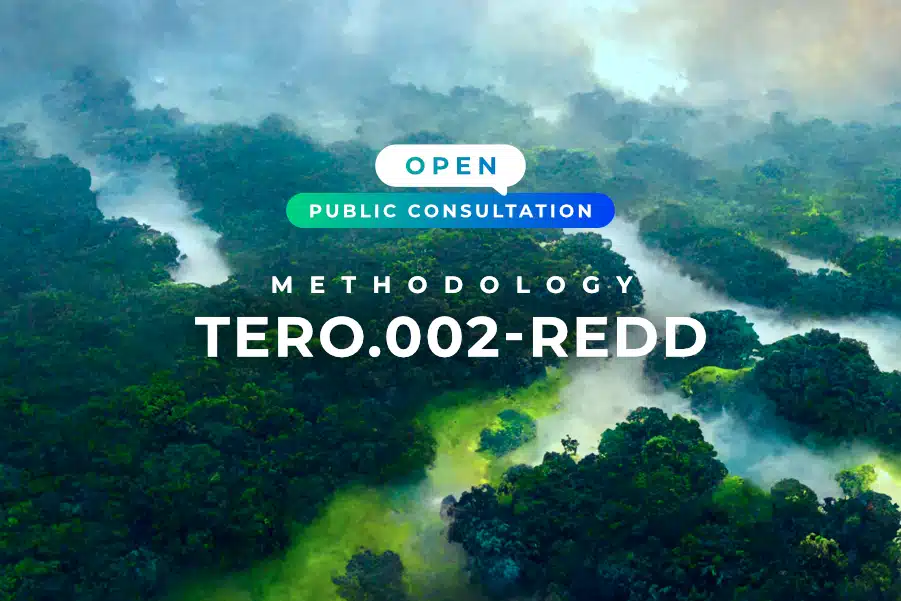
The Public Consultation of the TERO.002 – REDD Methodology is open and will receive comments and suggestions from interested parties until 06/21 at 11:59 pm.
The TERO.002 – REDD Methodology has as its main objective the generation of verified carbon credits from forestry projects through Avoided Planned Deforestation (APD) in the Amazon Biome. REDD stands for Reduction of Emissions from Deforestation and Forest Degradation.
The approach in this methodology is based on environmental impacts, focusing on keeping the forest standing, on the preservation and conservation of biodiversity. Eligible rural properties include both public and private properties with natural forests in the Amazon Biome.
The objective of the public consultation is the collective contribution to the definition of a methodological approach, which is essential for the implementation of actions that promote environmental preservation and sustainable development.
About Tero Carbon
Tero Carbon is a digital certifier of carbon credit and stock that has its own methodologies for generating certified quality environmental assets, such as Carbon Credit and Carbon Stock.
We have developed a platform that, in addition to facilitating the registration and certification process, uses Blockchain technology to generate issue, transfer and retirement certificates (NFT), providing greater transparency, traceability and avoiding double counting.
Tero Carbon is a Brazilian certifier, located in Manaus, Amazonas, in the middle of the Amazon Forest. We are very proud to be supported and guaranteed by the Federation of Industries of the Federação das Indústrias do Estado do Amazonas (FIEAM), which shares the mission of contributing to the economic development of the region, now also through a carbon market.
by Equipe Tero | May 15, 2023 | Methodology
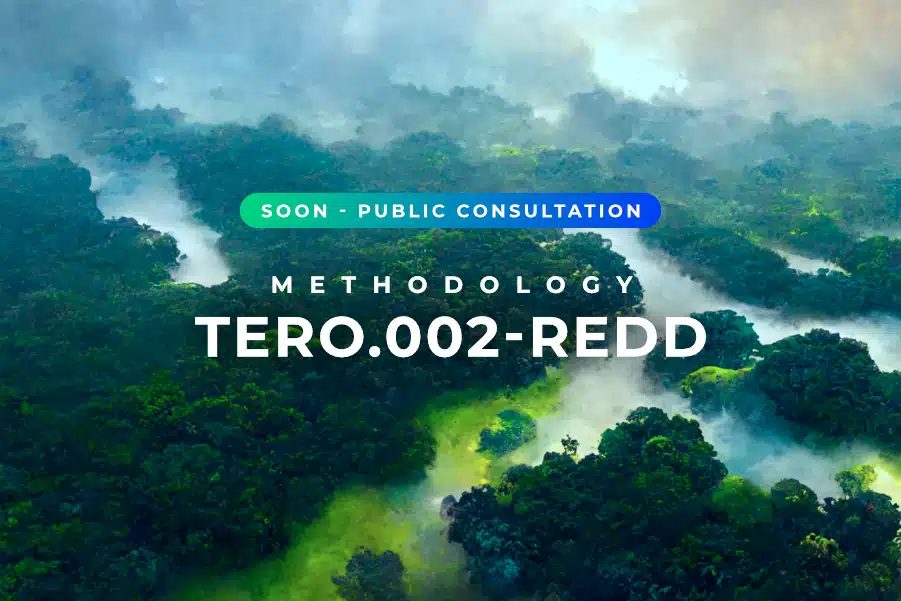
Public Consultation of the TERO.002 – REDD Methodology will be launched soon.
We will launch a new public consultation for the TERO.002 – REDD Methodology, which has as its main objective the generation of verified carbon credits from forestry projects through Avoided Planned Deforestation (APD) in the Amazon Biome. REDD stands for Reduction of Emissions from Deforestation and Forest Degradation.
The approach in this methodology is based on environmental impacts, focusing on keeping the forest standing and the preservation and conservation of biodiversity, including fauna and flora. Eligible rural properties include both public and private properties. with natural forests in the Amazon Biome.
The objective of the public consultation is the collective contribution to the definition of a methodological approach, which is essential for the implementation of actions that promote environmental preservation and sustainable development.
The consultation will be available from May 22nd at 10 am. Next week, we’ll share more information on how the public can contribute to the process.
About Tero Carbon
Tero Carbon is a digital certifier of carbon credit and stock that has its own methodologies for generating certified quality environmental assets, such as Carbon Credit and Carbon Stock.
We have developed a platform that, in addition to facilitating the registration and certification process, uses Blockchain technology to generate issue, transfer and retirement certificates (NFT), providing greater transparency, traceability and avoiding double counting.
Tero Carbon is a Brazilian certifier, located in Manaus, Amazonas, in the middle of the Amazon Forest. We are very proud to be supported and guaranteed by the Federation of Industries of the Federação das Indústrias do Estado do Amazonas (FIEAM), which shares the mission of contributing to the economic development of the region, now also through a carbon market.
by Equipe Tero | Feb 10, 2023 | Methodology
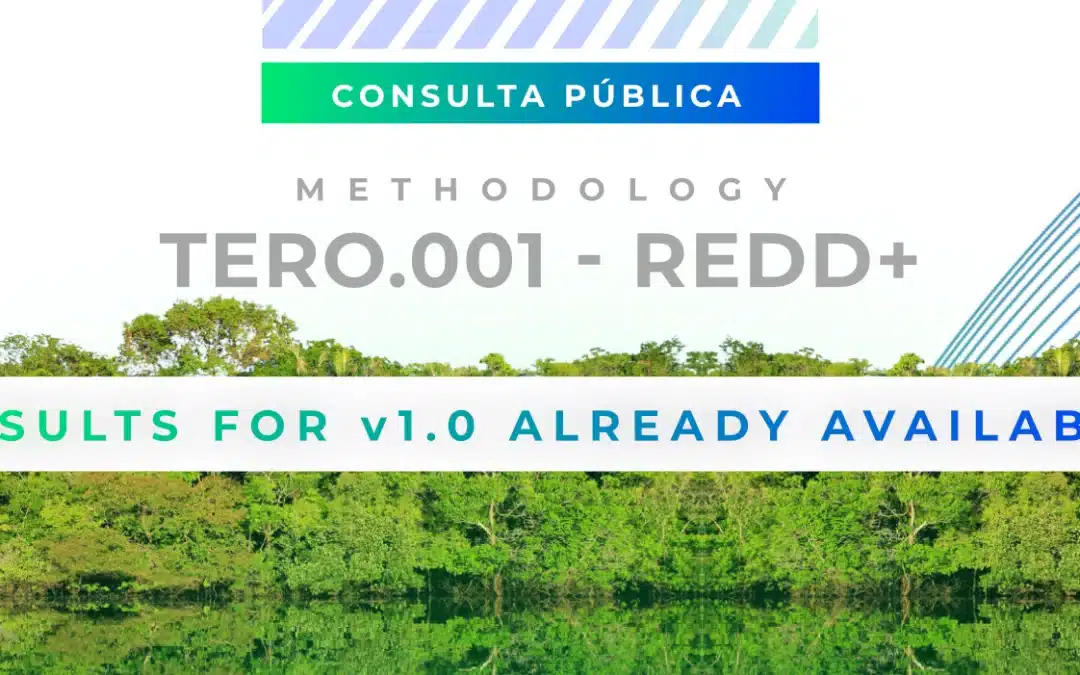
Version 1.0 of the TERO.001 – REDD+ Methodology was completed and is now available.
One of the main pillars of every certification is the transparency of its processes and the attempt to involve society in the discussion of issues related to its methodologies.
The steps described below are the roadmap followed to meet all the “checks” and reach the completion of version 1.0:
- 12/15/2022 a 01/14/2023 – We make available to the public the PDF with the TERO.001 – REDD+ methodology and the online form for the public to collaborate with their suggestions, criticisms and doubts;
- 01/15/2023 a 02/06/2023 – We review all contributions from the public form which will be taken into account in our next update.;
- 02/10/2023 – The v1.0 of the TERO.001 – REDD+ methodology was published;
- 02/14/2023 – We held the online seminar to provide an overview of the TERO.001 – REDD+ methodology and also to interact with the public’s feedback and suggestions.
See the recording in full – bit.ly/3YzUq9x
Access the methodology and check the completed v1.0 version.
About Tero Carbon
Tero Carbon is a digital certifier of carbon credit and carbon stock that has its own methodologies for generating certified quality environmental assets, such as Carbon Credit and Carbon Stock.
We have developed a platform that, in addition to facilitating the registration and certification process, uses Blockchain technology to generate issue, transfer and retirement certificates (NFT), providing greater transparency, traceability and avoiding double counting.
Tero Carbon is a Brazilian certifier, located in Manaus, Amazonas, in the middle of the Amazon Forest. We are very proud to be supported and guaranteed by the Federation of Industries of the State of Amazonas (FIEAM), which shares the mission of contributing to the economic development of the region, now also through a carbon market.